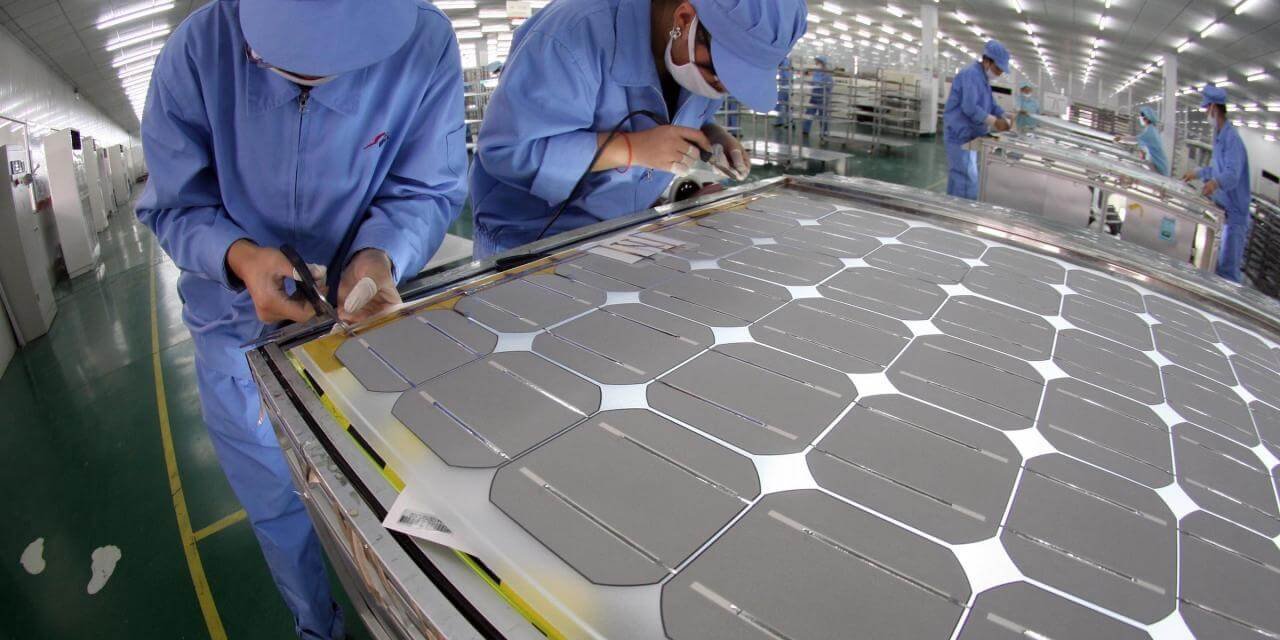
The assembly of solar modules involves multiple materials and manufacturing stages that must work together reliably. Adhesive systems can be used in selected parts of module construction, where accurate dispensing, controlled curing, and suitable environmental resistance are important.
Silica-based fillers may be considered during adhesive development because they can influence rheology and other physical characteristics. However, the final result depends on the complete formulation and processing conditions.
Read Also:ow Technology Is Supporting Smarter Retail Experiences
Why Adhesive Formulation Matters
An adhesive must satisfy both application and manufacturing requirements.
During production, it may need to pass through dispensing equipment, maintain its position after application, and cure within a defined process window.
After curing, the material may need appropriate adhesion, flexibility, and resistance to environmental exposure.
These requirements should be considered together.
Controlling Viscosity
Viscosity is one of the most important characteristics in dispensing applications.
If an adhesive is too fluid, it may spread excessively or fail to maintain the desired bead shape.
If it is too viscous, automated dispensing can become difficult.
A carefully selected filler can influence viscosity and flow behavior, but the effect depends on particle characteristics and concentration.
Thixotropic Behavior
Some adhesives need to flow when mechanical force is applied but recover a more stable structure after dispensing.
This behavior can be important when applying precise adhesive beads.
Formulators may evaluate thixotropy through controlled rheological testing.
The objective is to match the adhesive’s flow response with the dispensing equipment and assembly process.
Selecting Silica
Silica is available in different grades with different surface characteristics.
A hydrophilic grade may interact differently with a formulation than a hydrophobic grade.
Particle size, surface area, surface treatment, and dispersion behavior should therefore be reviewed before selecting a material.
Dispensing Equipment
The adhesive formulation and dispensing system should be evaluated together.
Pump type, nozzle dimensions, pressure, temperature, and dispensing speed can influence the final application.
A formulation that works with one machine may require adjustments when transferred to different equipment.
Process validation is therefore important.
Curing Conditions
Curing behavior can influence manufacturing efficiency.
Engineers should understand the relationship between temperature, humidity, time, catalyst concentration, and other relevant curing factors.
The adhesive should be tested under the actual or representative production conditions.
Unexpected changes in cure behavior can create production delays or inconsistent assembly quality.
Adhesion and Substrate Compatibility
Adhesives may be applied to different materials during module assembly.
The interaction between the adhesive and each substrate should be evaluated.
Surface cleanliness, preparation, roughness, and material chemistry can influence adhesion.
Testing should be performed using the actual substrate combinations whenever possible.
Environmental Exposure
Solar modules may experience outdoor conditions over extended periods.
Temperature cycling, humidity, UV exposure, and other environmental factors can influence materials.
Adhesive developers should use appropriate accelerated or representative testing to evaluate relevant characteristics.
Results should be interpreted according to the intended product requirements rather than assuming that one test predicts every field condition.
Quality Assurance
Consistent manufacturing requires monitoring of both incoming materials and finished adhesive.
Important checks may include:
- Viscosity
- Density
- Cure behavior
- Adhesion
- Appearance
- Dispensing consistency
- Storage stability
Batch records can help identify changes if production performance shifts.
Supplier Evaluation
Companies searching for solar panel adhesive silica should evaluate silica according to the complete adhesive system rather than considering the filler separately.
Technical data, batch consistency, packaging, storage recommendations, and application support can all be relevant.
Scale-Up
Laboratory mixing and industrial mixing are not identical.
Production equipment may produce different shear rates, mixing patterns, and temperatures.
Pilot-scale testing can help determine whether laboratory results remain consistent during commercial manufacturing.
Frequently Asked Questions
1. What properties are important in a solar-module adhesive?
Viscosity, dispensing behavior, curing, adhesion, mechanical characteristics, and environmental resistance may all be relevant.
2. How can silica affect adhesive behavior?
Depending on its characteristics and concentration, silica can influence rheology, viscosity, reinforcement, and processing behavior.
3. Why should adhesive and dispensing equipment be tested together?
Because equipment conditions such as pressure, speed, and nozzle size can change how the adhesive flows and is deposited.
Conclusion
Developing an adhesive system for solar module assembly requires coordination between material selection, formulation chemistry, dispensing equipment, curing conditions, and quality control.
Silica can be evaluated as a functional component when its characteristics are compatible with the adhesive. Controlled testing and production-scale validation remain essential for achieving consistent results.