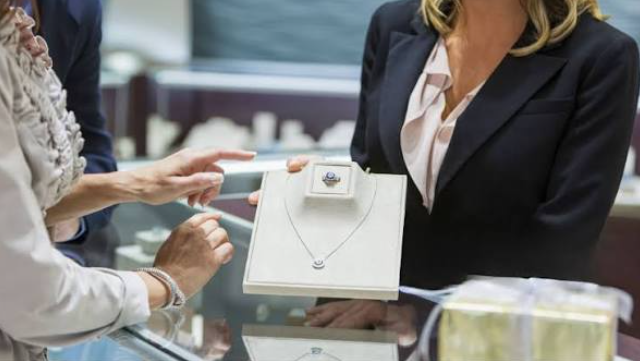
Jewelers offer a range of options, including custom-designed pieces. Customization involves several stages, from initial design development to 3D digital rendering. Diamond grading reports document a stone’s characteristics, and design details influence the finished piece’s appearance and fit. Experienced jewelers can explain diamond documentation, design options, maintenance services, and ways to pair or reset existing stones. Here are some questions to ask before purchasing a piece of jewelry:
How Will You Design It?
Custom jewelry may begin with a specific concept rather than an existing finished piece. The design process sometimes includes concept development and 3D digital rendering before production begins. A rendering provides a visual reference for the proposed piece, and later stages translate the approved design into physical jewelry. Ask when design revisions can be made and how the selected stone will fit within the proposed structure. Metal selection also influences various aspects of the finished piece; this includes the appearance, durability, and construction. Reviewing examples of completed custom designs may provide useful references when discussing distinctive features or proportions.
See also: Selecting Coated Steel Pipe for Industrial Applications
How Will You Maintain It?
Jewelry maintenance goes beyond routine cleaning, especially when gemstones are held in delicate settings. Inspections and repairs are key services, and some jewelers offer resizing and rhodium plating for certain types of jewelry. The following questions can help identify which maintenance services are appropriate:
- Inspection: Ask how often the setting and other components should be inspected for wear or damage.
- Resizing: Discuss whether the ring’s design and structure allow for size adjustments.
- Prong repair: Ask how worn or damaged prongs are evaluated and repaired.
- Cleaning: Discuss which cleaning methods are appropriate for the jewelry’s materials and gemstones.
How Will It Pair?
An engagement ring should be designed with the wedding band in mind, particularly when both rings will be worn together. Ring profiles and settings vary, so some designs may sit differently alongside a wedding band. A higher setting creates more space between the rings, while a low-profile design requires a curved or contoured band to fit properly. Comparing both pieces together helps reveal how their shapes, proportions, and decorative details work as a pair.
When resetting an existing stone, the new setting should also complement the stone’s shape, size, and proportions. Remounting can place a diamond or colored stone into a new ring, bracelet, earring, or pendant design, depending on the stone and proposed setting. Discussing the existing stone alongside potential designs helps determine which setting and jewelry format work together visually and structurally.
How Is the Diamond Graded?
A diamond grading report identifies characteristics such as carat weight, color, clarity, and cut. Additional information may include:
- Polish
- Symmetry
- Fluorescence
- Table
- Depth
This information provides a more detailed description of the individual stone. Laboratory documentation gives buyers a standardized reference for evaluating and comparing diamonds. Loose diamonds let buyers compare individual stones before pairing one with a particular setting. Experienced jewelers can explain the grading terminology; they also describe how individual characteristics relate to the finished piece.
Diamond comparisons become more precise when buyers view documented grades alongside the actual stone. Stones with similar shapes can have different proportions, clarity characteristics, or color grades, which sometimes affect their appearance. Reviewing these distinctions helps buyers better understand differences between diamonds that appear similar at first.
Ask Jewelers About Their Services
A jewelry purchase can raise questions about services needed after you buy the piece. Repairs, cleanings, and restorations address different needs throughout ownership; asking jewelers about available services before purchasing helps you understand how the piece will be supported later. Speak with a jeweler about your preferred design and future service requirements before making your purchase.