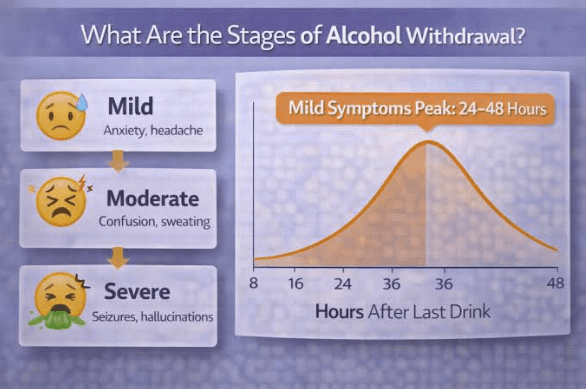
Stopping alcohol after heavy, prolonged use is not simply a matter of willpower. The body adapts to a constant supply of alcohol over time, and when that supply is cut off, the nervous system can react in ways that range from deeply uncomfortable to genuinely life-threatening. Understanding what happens during alcohol withdrawal, and when, can make the difference between a safe recovery and a medical emergency.
This article walks through the withdrawal timeline in detail, explains the science behind why these symptoms occur, highlights the warning signs that require immediate medical attention, and covers the treatment options available to people who want to stop drinking safely.
Why Alcohol Withdrawal Happens
Alcohol is a central nervous system depressant. It enhances the effect of GABA, a neurotransmitter that calms brain activity, while suppressing glutamate, which excites the brain. When someone drinks heavily every day for weeks, months, or years, the brain compensates by reducing its own GABA sensitivity and increasing glutamate activity. The brain essentially recalibrates to function in the presence of alcohol.
When drinking stops abruptly, this compensatory state remains. With no alcohol to balance the equation, the brain becomes hyperactive. That surge of excitatory activity is what drives withdrawal symptoms. The brain is not malfunctioning exactly; it is responding logically to a sudden chemical shift it was not prepared for.
Not everyone who drinks will experience significant withdrawal. The severity depends on several factors: how much alcohol a person typically consumes, how long they have been drinking heavily, their age, their general health, and whether they have gone through withdrawal before. Previous withdrawal episodes can actually prime the brain to react more severely in future attempts, a phenomenon researchers call kindling.
The Alcohol Withdrawal Timeline
Withdrawal does not follow a single, identical path for every person. However, symptoms tend to unfold in recognizable phases. The timeline below reflects the general progression seen in clinical settings.
| Timeframe After Last Drink | Common Symptoms | Risk Level |
| 6 to 12 hours | Anxiety, headache, nausea, tremors, sweating, insomnia | Mild to moderate |
| 12 to 24 hours | Intensified tremors, irritability, elevated heart rate and blood pressure, possible hallucinations | Moderate |
| 24 to 48 hours | Seizure risk peaks, continued hallucinations, confusion, fever | High |
| 48 to 72 hours | Risk of delirium tremens (DTs), severe disorientation, autonomic instability | Severe |
| 72 hours to 1 week | Gradual symptom resolution for most; DTs may persist | Variable |
| 1 to 4 weeks | Post-acute symptoms: sleep disruption, mood swings, cravings, fatigue | Low to moderate |
Early Stage: Hours Six Through Twenty-Four
The first symptoms often appear within six hours of the last drink. Many people are surprised by how quickly this happens. A person may wake up shaking after sleeping through the night, or they may notice anxiety and nausea setting in well before a full day has passed. Mild tremors, sweating, and an elevated heart rate are common. At this stage, symptoms are uncomfortable but rarely dangerous for otherwise healthy adults.
Around 12 to 24 hours in, a subset of people, roughly 25 percent according to research published in the American Family Physician journal, experience alcoholic hallucinosis. These are typically visual or auditory hallucinations that occur while the person remains oriented to their surroundings. This is distinct from the more severe confusion of delirium tremens, which comes later.
Peak Risk Stage: Twenty-Four to Seventy-Two Hours
This window is the most medically dangerous. Seizures are most likely to occur between 24 and 48 hours after the last drink. According to the National Institute on Alcohol Abuse and Alcoholism (NIAAA), approximately 2 to 9 percent of people undergoing alcohol withdrawal will experience a seizure if not treated. These are typically generalized tonic-clonic seizures. They can occur without warning and carry a real risk of injury or respiratory complications.
Delirium tremens, often abbreviated as DTs, represents the most severe form of alcohol withdrawal and typically emerges between 48 and 72 hours after stopping. The NIAAA estimates that DTs occur in about 3 to 5 percent of people experiencing alcohol withdrawal. Symptoms include severe disorientation, profound agitation, rapid heart rate, high fever, and dangerous fluctuations in blood pressure. Without medical treatment, the mortality rate from DTs has historically been as high as 35 percent. With appropriate medical care, that figure drops to roughly 1 to 4 percent.
Post-Acute Withdrawal: The Weeks That Follow
Even after the acute phase resolves, many people experience what is called post-acute withdrawal syndrome, or PAWS. This is not a separate medical crisis but rather a prolonged adjustment period. Symptoms include persistent sleep difficulties, mood instability, difficulty concentrating, fatigue, and ongoing alcohol cravings. PAWS can last anywhere from a few weeks to several months. It is one of the primary reasons that relapse rates are high in early recovery, especially for people who stop drinking without any ongoing support.
Warning Signs That Require Emergency Care
Anyone supporting a person through alcohol withdrawal should know which symptoms signal an emergency. Calling for medical help quickly can prevent serious harm.
- Seizures of any kind
- Severe confusion or disorientation that worsens over time
- High fever (above 101 degrees Fahrenheit)
- Rapid or irregular heartbeat
- Uncontrollable shaking or rigidity
- Hallucinations accompanied by extreme agitation
- Loss of consciousness or inability to be roused
- Vomiting with inability to keep fluids down, raising risk of dehydration
It is worth repeating that these symptoms can develop quickly and unpredictably. A person who seems to be managing mild withdrawal in the first twelve hours may deteriorate rapidly within the following day. Home monitoring without any medical oversight is genuinely risky for anyone with a history of heavy daily drinking.
Medical Treatment Options for Alcohol Withdrawal
Medically supervised detox exists precisely because withdrawal can be dangerous. The standard of care for moderate to severe alcohol withdrawal involves benzodiazepines, a class of medications that work on the same GABA pathways that alcohol affects. Drugs like lorazepam, diazepam, and chlordiazepoxide help calm the overactive nervous system, reduce seizure risk, and ease physical symptoms. Doses are typically tapered over several days as the body stabilizes.
Anticonvulsants such as carbamazepine or gabapentin are sometimes used as alternatives or adjuncts, particularly for people with milder withdrawal or those who cannot safely take benzodiazepines. Medications to manage blood pressure, nausea, and hydration are also part of a comprehensive detox protocol.
For people in the San Jose area or surrounding communities, finding a structured and medically equipped setting is an important first step. A quality addiction treatment center in the Bay Area will typically offer both medical detox services and the transition to longer-term treatment, since detox alone addresses the physical dependency but not the psychological and behavioral patterns that sustain addiction.
What Happens After Detox
Detox is the starting point, not the finish line. Once the acute withdrawal phase is complete, the work of understanding and addressing the underlying causes of alcohol dependence begins. Treatment options vary considerably depending on a person’s history, living situation, and level of support at home.
- Inpatient rehabilitation: A residential setting where the person stays at the facility, typically for 30 to 90 days, and receives daily therapy, group counseling, and medical monitoring.
- Partial hospitalization programs (PHP): A step down from inpatient care, involving structured treatment for several hours each day while the person lives at home or in a sober living environment.
- Intensive outpatient programs (IOP): Multiple weekly sessions of group and individual therapy, suited for people with a stable home environment and lower relapse risk.
- Standard outpatient therapy: Weekly or biweekly sessions with a counselor or therapist, often combined with medication-assisted treatment.
- Peer support and mutual aid groups: Programs like Alcoholics Anonymous (AA) or SMART Recovery provide community-based accountability and shared experience.
Medication-assisted treatment (MAT) for alcohol use disorder is also well-supported by research. Naltrexone, acamprosate, and disulfiram are FDA-approved medications shown to reduce cravings and support sustained abstinence. The Substance Abuse and Mental Health Services Administration (SAMHSA) considers MAT a first-line treatment for alcohol use disorder, yet it remains significantly underutilized. Many people are simply not told that these options exist.
Preparing for a Safer Withdrawal
If someone is considering stopping alcohol after a period of heavy use, a few practical steps can help reduce risk before anything else happens.
- Talk to a doctor before stopping, even if it feels like an awkward conversation. Physicians can assess withdrawal risk and prescribe medications for outpatient detox when appropriate.
- Be honest about consumption levels. Underreporting to a healthcare provider limits their ability to give accurate guidance.
- Have a trusted person available during the early days of withdrawal, someone who knows the warning signs.
- Keep emergency contact information accessible, including local poison control and emergency services.
- Avoid abrupt, unplanned stops after very heavy drinking. Tapering under medical guidance can reduce the severity of withdrawal in some cases.
Alcohol withdrawal is one of the few drug withdrawal syndromes that can be fatal without treatment. That fact deserves to be stated plainly, not to frighten anyone, but because knowing the real stakes helps people take the right precautions. With proper medical support, the vast majority of people get through detox safely and are able to move into a recovery process that works for their lives.