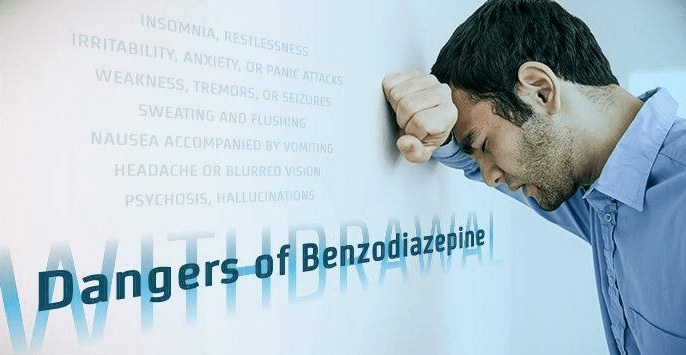
Most people know that quitting alcohol cold turkey can be life-threatening. Far fewer realize that stopping benzodiazepines abruptly carries the same category of risk. That gap in public knowledge has real consequences. Every year, people taper off Xanax, Valium, or Klonopin on their own, without medical guidance, and end up in emergency rooms. Understanding what benzodiazepines actually do to the nervous system, and what happens when they are removed, is genuinely useful information whether you are personally affected or simply trying to understand what someone you care about is going through.
What Benzodiazepines Do Inside the Brain
Benzodiazepines work by enhancing the activity of gamma-aminobutyric acid, commonly known as GABA. GABA is the brain’s primary inhibitory neurotransmitter. Think of it as the system that slows things down, quiets overactive neurons, and keeps electrical activity in the brain from spiraling. Drugs like diazepam, alprazolam, clonazepam, and lorazepam bind to GABA receptors and amplify this calming effect far beyond what the brain produces naturally.
Over time, the brain adapts. It begins to downregulate its own GABA production and sensitivity because the drug is doing so much of the work. Simultaneously, excitatory systems, particularly those driven by glutamate, remain active and eventually compensate by becoming more reactive. The result is a nervous system that has quietly restructured itself around the presence of the drug. Remove the drug suddenly, and the inhibitory brakes disappear while the excitatory accelerator stays floored. That imbalance is what drives withdrawal.
Who Is at Risk and How Dependence Develops
Physical dependence on benzodiazepines is not a character flaw or a sign of addiction in every case. It is a predictable physiological outcome of taking these medications regularly, even exactly as prescribed. Research published in the journal Addiction found that approximately 40 percent of people who take benzodiazepines daily for six weeks or more will develop some degree of physical dependence. The timeline can be even shorter with higher-potency, shorter-acting agents like alprazolam or triazolam.
Several factors influence how significant dependence becomes. Dose matters. Duration of use matters. The specific drug matters, since shorter-acting benzos tend to produce more acute withdrawal than longer-acting ones. Genetics, history of anxiety disorders, and prior substance use also play a role. Someone who has been prescribed a low-dose benzo for occasional sleep disturbances for two months occupies a very different risk category than someone who has been taking high-dose clonazepam daily for three years.
The Stages and Timeline of Withdrawal
Withdrawal does not follow a single predictable script, but there are patterns that clinicians recognize. The timing depends heavily on the half-life of the specific benzodiazepine involved. Short-acting drugs produce earlier, sharper withdrawal. Longer-acting drugs produce a more delayed but often more drawn-out process.
| Drug | Half-Life Category | Typical Withdrawal Onset | Peak Symptoms |
| Alprazolam (Xanax) | Short | 6 to 12 hours after last dose | Days 1 to 4 |
| Lorazepam (Ativan) | Short to intermediate | 8 to 24 hours after last dose | Days 2 to 5 |
| Clonazepam (Klonopin) | Long | 1 to 3 days after last dose | Days 5 to 9 |
| Diazepam (Valium) | Long | 2 to 4 days after last dose | Days 5 to 10 |
Clinicians generally describe withdrawal in two broad phases. The acute phase covers the most intense physical and neurological symptoms. This is when seizure risk is highest. The post-acute phase, sometimes called protracted withdrawal, can linger for weeks or months and is characterized more by psychological symptoms: persistent anxiety, depression, cognitive fog, and insomnia. Not everyone experiences protracted withdrawal, but for long-term users, it is common enough that any honest discussion of recovery needs to account for it.
Common Symptoms to Expect
The symptom profile of benzodiazepine withdrawal overlaps considerably with alcohol withdrawal, which makes sense given that both substances act on the GABA system. The severity ranges from uncomfortable to medically dangerous, and individual experiences vary widely.
- Rebound anxiety and panic attacks, often more intense than the anxiety the drug was originally prescribed to treat
- Insomnia and disturbed sleep architecture
- Tremors, particularly in the hands
- Sweating and elevated heart rate
- Nausea and gastrointestinal discomfort
- Hypersensitivity to light, sound, and touch
- Muscle aches and tension
- Depersonalization or derealization, a sense of feeling detached from reality
- Grand mal seizures in severe cases, which can occur without warning
- Delirium in the most serious presentations, particularly among long-term, high-dose users
The seizure risk deserves particular emphasis. Unlike opioid withdrawal, which is agonizing but rarely directly fatal in otherwise healthy adults, benzodiazepine withdrawal can kill. A seizure during withdrawal can result in injury, aspiration, or cardiac events. This is the primary reason medical supervision is not optional for anyone with significant dependence.
Why Medical Supervision Changes the Outcome
The standard medical approach to benzodiazepine withdrawal involves a gradual taper, often using a longer-acting benzodiazepine like diazepam as a substitute, then slowly reducing the dose over weeks or months. This controlled reduction allows the brain to readjust incrementally rather than being thrown into sudden withdrawal. The Ashton Manual, a widely cited protocol developed by British pharmacologist Dr. Heather Ashton, has guided many clinicians and patients through this process and recommends tapers that sometimes extend six months or longer for heavily dependent individuals.
For people with severe dependence, a structured benzo detox program provides 24-hour monitoring, the ability to manage complications like seizures immediately, and access to adjunct medications that can ease symptoms without introducing new dependencies. Medications such as anticonvulsants, beta-blockers, and certain antidepressants are sometimes used to address specific symptoms during the process.
Beyond the physical safety aspect, medically supervised withdrawal also improves long-term outcomes. People who attempt to quit without support have significantly higher relapse rates, partly because the discomfort of withdrawal drives them back to the drug, and partly because underlying conditions like anxiety disorders, which the benzo may have been masking, resurface without any therapeutic framework in place to address them.
The Role of Psychological Support During and After Withdrawal
Physical stabilization is only one part of recovery. The neurological changes that occur during long-term benzodiazepine use affect cognition, emotional regulation, and stress response in ways that persist well beyond the acute withdrawal window. Cognitive behavioral therapy, particularly approaches that target anxiety and maladaptive thought patterns, has solid evidence behind it as a support tool during and after benzodiazepine withdrawal.
Sleep disturbance is one of the most persistent complaints among people in protracted withdrawal. Sleep hygiene interventions, stimulus control therapy, and, in some cases, melatonin or other non-habit-forming sleep aids can help bridge the gap while the brain gradually recalibrates its own sleep-wake regulation. This is a slow process. Expecting normal sleep within the first month of stopping a long-term benzo is usually unrealistic, and setting more accurate expectations up front reduces the sense of failure that often leads people to relapse.
Building a Support System That Actually Helps
Isolation is one of the strongest predictors of poor outcomes in any withdrawal process. Family members and close friends who understand what protracted withdrawal actually involves, including the timeline and the psychological symptoms, are better positioned to offer useful support rather than pressure. Support groups specifically for benzodiazepine withdrawal exist both in person and online, and many people find them invaluable during the long post-acute phase when the acute medical drama has passed but the daily struggle of recovery continues.
Questions Worth Asking Before You or Someone You Love Stops
If you are considering stopping a benzodiazepine or helping someone through the process, the following questions are worth raising with a physician or addiction medicine specialist before anything else changes.
- How long has this medication been taken, and at what dose? Higher doses and longer durations generally require slower, more carefully supervised tapers.
- What was the original reason for prescribing? If it was an anxiety disorder, what is the plan for managing that condition during and after withdrawal?
- Is outpatient tapering realistic, or does the level of dependence suggest inpatient stabilization would be safer?
- Are there any co-occurring medical or psychiatric conditions that complicate the picture?
- What does success look like at 30 days, at 6 months, at one year? Setting benchmarks that account for protracted withdrawal prevents premature discouragement.
These are not questions designed to create obstacles. They are practical filters that help match the level of support to the actual clinical situation. Benzodiazepine withdrawal is one of those areas where getting the approach right from the start matters a great deal. The brain is capable of recovering, often more fully than people expect. But that recovery tends to go better with structure, patience, and realistic expectations built in from the beginning.