Introduction
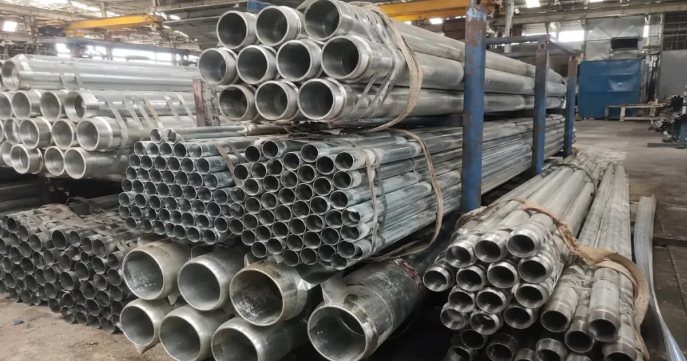
Coated steel pipe can provide an additional protective layer when steel products are used in environments where corrosion exposure is a concern. However, selecting the right coated pipe requires careful consideration of the application, coating system, dimensions, inspection requirements, and handling conditions.
Businesses evaluating fbe coated pipe should look beyond the coating name and assess how the complete product matches their project requirements.
Identify the Operating Environment
The first consideration should be the environment in which the pipe will operate.
Underground pipelines may encounter soil and moisture, while industrial facilities may expose pipe to chemicals, temperature changes, or other conditions.
Understanding the environment allows engineers to identify appropriate corrosion-control requirements.
See also: 8 Kitchen Habits That Can Extend the Life of Your LPG Gas Chulha
Choose the Appropriate Coating
Different coating systems are designed for different applications. FBE is one commonly used option for steel pipe, particularly where a durable external barrier is required.
The selected coating should be evaluated according to project standards, service conditions, installation method, and expected exposure.
Check Pipe Dimensions
Coating selection should not be separated from the underlying pipe specification.
Buyers should confirm outside diameter, wall thickness, length, steel grade, and manufacturing method.
Accurate dimensions are necessary for compatibility with fittings, joining procedures, transportation, and installation.
Review Surface Preparation
The coating’s performance depends partly on the condition of the steel surface before application.
Buyers should ask how the surface is prepared and how cleanliness and surface profile are controlled.
Proper preparation supports coating adhesion and helps create a consistent finished surface.
Inspect Coating Quality
Inspection should be included in the procurement specification.
Depending on project requirements, quality checks may cover visual condition, coating thickness, adhesion, holiday detection, and other characteristics.
The inspection results should be recorded and made available as part of the project documentation.
Consider Handling and Transportation
Coated pipe requires appropriate handling. Improper lifting or storage can damage the coating before installation.
Buyers should establish suitable handling requirements with suppliers and logistics providers.
Storage areas should also be prepared to protect the coated surface from unnecessary impact or abrasion.
Understand Repair Procedures
Even with careful handling, coating damage can occasionally occur during transportation or installation.
A project should therefore have a defined repair procedure. The method should be compatible with the coating system and approved according to the relevant specification.
Inspection after repair can help confirm that the affected area meets project requirements.
Evaluate Supplier Capabilities
When purchasing coated pipe, buyers should evaluate the supplier’s ability to manage both pipe manufacturing and coating requirements.
Important considerations may include:
- Manufacturing capability
- Coating equipment
- Surface preparation
- Quality-control procedures
- Inspection
- Documentation
- Production capacity
- Packaging
- Delivery
This provides a more complete view of the supplier’s capabilities.
Consider the Total Project Cost
The cost of coated pipe includes more than the initial purchase price. Buyers may also need to consider inspection, transportation, handling, repairs, storage, and installation requirements.
A total-cost assessment can provide a more realistic basis for procurement decisions.
FAQs
1. What is FBE-coated pipe?
It is steel pipe that has received a fusion bonded epoxy coating designed to provide an external protective barrier. Specific coating requirements depend on the application and project specification.
2. Why should coating thickness be inspected?
Thickness inspection helps verify whether the applied coating meets the specified requirements and provides a documented quality-control reference.
3. Can coated pipe be repaired after damage?
Depending on the coating system and project specification, damaged areas may be repaired using an approved procedure. The repaired area should then be inspected.
Conclusion
Selecting coated steel pipe involves evaluating the pipe itself as well as the protective coating. Operating environment, coating type, surface preparation, dimensions, inspection, handling, repair procedures, and supplier capabilities should all be considered.
A detailed procurement specification can help manufacturers and buyers maintain consistent expectations and reduce avoidable problems during transportation and installation.