Most people have heard the phrase ‘I’m so OCD about that’ tossed around casually, usually about keeping a tidy desk or color-coded closet. That casual use has done a quiet disservice to the millions of people who live with obsessive compulsive disorder as a genuine, sometimes disabling condition. The real experience is far more exhausting, far more intrusive, and far less about personal preference than the phrase suggests. Understanding what OCD actually involves, what drives it, and how it responds to treatment can make a meaningful difference, whether you are living with it yourself or supporting someone who is.
What OCD Actually Looks Like
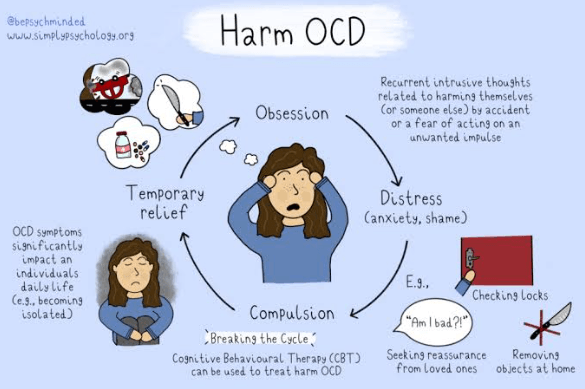
Obsessive compulsive disorder is defined by two core features: obsessions and compulsions. Obsessions are unwanted, recurring thoughts, images, or urges that feel intrusive and difficult to dismiss. Compulsions are the repetitive behaviors or mental acts a person performs in an attempt to reduce the distress those obsessions cause. The temporary relief that follows a compulsion reinforces the cycle, which is exactly why the disorder tends to persist without proper intervention.
The content of obsessions varies enormously from person to person. Common themes include fears about contamination, doubts about whether doors were locked or appliances turned off, intrusive thoughts about causing harm, and a pressing need for symmetry or exactness. It is worth pointing out that having an intrusive thought is not the same as wanting to act on it. People with OCD are often deeply distressed by their own thoughts precisely because those thoughts conflict with their values.
Compulsions can be visible behaviors such as hand washing, checking, or arranging objects, but they can also be entirely mental, like silently repeating a phrase or mentally reviewing an event over and over. Because mental compulsions leave no outward trace, they sometimes go unrecognized even by clinicians who are less familiar with the disorder.
How Common Is OCD and Who Does It Affect
OCD is more widespread than many people assume. The World Health Organization has identified it as one of the top causes of disability worldwide among mental health conditions. In the United States, the National Institute of Mental Health estimates that roughly 1.2 percent of adults experienced OCD in the past year, with slightly higher rates among women than men. Onset can happen at almost any age, though two common windows are late childhood or early adolescence and early adulthood.
Children can and do develop OCD. In pediatric cases, compulsions may be more visible than the obsessions driving them, partly because younger children sometimes struggle to articulate what they are feeling internally. A child who insists on rituals at bedtime, demands that family members repeat certain phrases, or refuses to touch particular objects may be experiencing genuine OCD rather than ordinary childhood quirks.
The disorder also tends to wax and wane. Stress, life transitions, illness, and sleep disruption can all trigger flare-ups in someone whose symptoms had been relatively well managed. That fluctuating pattern sometimes leads people to believe they no longer need support, only to find symptoms returning later under pressure.
The Biology and Psychology Behind OCD
Research points to both neurological and psychological factors in the development of OCD. Brain imaging studies have consistently identified differences in activity within a circuit involving the orbitofrontal cortex, the caudate nucleus, and the thalamus. This circuit appears to get stuck in a kind of error-signaling loop, generating a persistent sense that something is wrong or incomplete even when objectively nothing is.
Genetics play a role as well. Having a first-degree relative with OCD increases a person’s likelihood of developing it, though the specific genes involved are still being studied. It is not a simple one-gene, one-outcome situation. Multiple genes likely interact with environmental factors to raise or lower risk.
From a psychological standpoint, certain belief patterns tend to maintain the disorder. These include overestimating the probability of harm, believing that thinking something is morally equivalent to doing it (sometimes called thought-action fusion), and placing excessive importance on controlling one’s own thoughts. Cognitive behavioral models of OCD focus heavily on these patterns because they are the targets that therapy can directly address.
Evidence-Based Approaches to Treatment
For anyone wondering where to begin, the research literature on this topic is relatively clear. Exposure and response prevention, a specific form of cognitive behavioral therapy, is the most well-supported psychological intervention for OCD. It works by gradually exposing a person to the situations or thoughts that trigger their obsessions while helping them resist the urge to perform compulsions. Over time, the anxiety that drives compulsive behavior decreases, and the person learns that they can tolerate discomfort without the feared outcome occurring.
Medication is another well-established option. Selective serotonin reuptake inhibitors are the first-line pharmacological choice, and they are often used in combination with therapy for more moderate to severe presentations. The doses required to treat OCD are sometimes higher than those used for depression, and it can take several weeks to gauge effectiveness. Switching or augmenting medications under medical supervision is sometimes necessary before finding a regimen that works.
For people whose symptoms are more complex or treatment-resistant, specialized treatment for Obsessive Compulsive Disorder programs offer intensive outpatient or residential options that provide more frequent therapeutic contact, structured exposure work, and coordinated psychiatric care within a single setting.
| Approach | Type | Best Suited For | Evidence Level |
| Exposure and Response Prevention (ERP) | Psychotherapy | Mild to severe OCD, all ages | Very strong; considered first-line |
| SSRI Medication | Pharmacological | Moderate to severe symptoms, often combined with ERP | Very strong; first-line pharmacotherapy |
| Cognitive Therapy | Psychotherapy | Patients who struggle to engage with exposure | Moderate; often used alongside ERP |
| Intensive Outpatient Programs | Structured clinical care | Partial response to standard treatment | Strong for treatment-resistant cases |
| Acceptance and Commitment Therapy (ACT) | Psychotherapy | Patients working on psychological flexibility | Emerging; promising supporting research |
| Deep Brain Stimulation | Neurostimulation | Severe, refractory OCD unresponsive to other treatments | Limited but growing; last-resort option |
Common Barriers That Delay Getting Help
Despite effective treatments existing, the average time between onset of OCD symptoms and receiving an accurate diagnosis is estimated at around 14 to 17 years, according to data from the International OCD Foundation. That gap is striking. Several factors contribute to it.
- Shame and secrecy: Many people with OCD feel embarrassed by the content of their obsessions and go to great lengths to hide their symptoms, even from doctors.
- Misdiagnosis: OCD can resemble generalized anxiety disorder, depression, or even psychosis if clinicians are not specifically trained to distinguish it.
- Lack of awareness: Some people do not recognize that their experiences have a name, a cause, and a treatment.
- Fear of exposure therapy: Knowing that treatment involves facing feared situations can make people reluctant to seek it out.
- Belief that symptoms are a character flaw: A persistent misconception frames OCD as a quirk of personality rather than a neurobiological condition.
Reducing that diagnostic gap starts with better public awareness and better screening at the primary care level. A single well-placed question from a family doctor asking about intrusive thoughts or repetitive behaviors can open a conversation that changes someone’s trajectory.
Supporting Someone Who Has OCD
Family members and close friends often become unwitting participants in OCD cycles. Accommodation, meaning helping a loved one avoid triggers or taking part in their rituals to reduce their distress in the moment, feels compassionate. In the long run, it tends to reinforce the disorder rather than ease it. A person who is reassured that the stove is off, over and over, gets temporary relief but their brain learns nothing new about tolerating uncertainty.
That does not mean family members should be cold or withholding. It means that the most helpful stance is a supportive one that gently declines to participate in compulsions while acknowledging that the distress is real. Family therapy or psychoeducation sessions, which many OCD programs offer, can teach these skills in a structured way.
Talking openly about OCD, using accurate language, and resisting the urge to minimize symptoms are all things that matter. Hearing ‘everyone checks things twice’ or ‘just stop thinking about it’ is not helpful to someone whose brain is generating alarm signals that feel impossible to override.
A Realistic Picture of Recovery
OCD is a chronic condition for many people, but chronic does not mean unmanageable. With the right combination of therapy, medication when appropriate, and ongoing self-awareness, a large proportion of people with OCD experience significant reductions in symptom severity and meaningful improvements in quality of life. Some reach a point where symptoms are barely noticeable in daily functioning. Others manage a moderate level of symptoms well enough to work, maintain relationships, and pursue goals that matter to them.
Recovery is rarely linear. Setbacks happen, especially during stressful periods. The skills learned in exposure-based therapy, however, remain available even when symptoms flare. People who have done the work tend to recover faster from those flare-ups because they already know what helps. That accumulated knowledge is something no relapse can take away.